How Matter and Thread Are Finally Unifying the Smart Home

For years, the smart home industry promised seamless automation, but most households ended up managing disconnected ecosystems instead. Smart bulbs needed one app, security cameras another, and televisions or speakers often depended entirely on which company made them.
That fragmentation is finally beginning to disappear. Thanks to new interoperability standards like Matter and Thread, smart homes are becoming more unified, allowing devices from different brands to communicate more reliably across a single ecosystem.
Major technology companies including Apple, Google, Samsung, and Amazon are now supporting shared smart home standards that simplify setup, improve automation, and reduce platform lock‑in. The result is a smarter, more flexible connected home experience.
Why Smart Home Consolidation Matters
The average connected home now contains far more devices than it did a few years ago:
- Smart TVs
- Security cameras
- Voice assistants
- Smart lights
- Thermostats
- Smart plugs
- Door locks
- Home appliances
Without interoperability, every new device adds more complexity.
Consumers have historically dealt with:
- Multiple control apps
- Devices that fail to communicate
- Complicated setup processes
- Unstable automations
- Vendor lock‑in
Modern interoperability standards are changing that by creating a shared communication framework for smart devices. Today, a smart light from one company can work alongside a thermostat or television from another while remaining controllable through platforms like Apple Home or Google Home.
What Are Matter and Thread?
Matter
Matter is a universal smart home standard designed to improve compatibility between devices from different manufacturers. Instead of relying heavily on proprietary integrations, Matter standardizes:
- Device onboarding
- Communication
- Automation support
- Security frameworks
This allows devices to work together more consistently across ecosystems. Matter also improves local communication, reducing reliance on cloud-only systems and improving response times.
Thread
Thread is a low-power mesh networking protocol designed for smart devices.
Unlike traditional Wi‑Fi setups where every device connects directly to the router, Thread devices communicate with each other in a mesh structure, improving coverage and reliability.
Together:
- Matter handles interoperability.
- Thread helps deliver stable device communication.
Combined, they create a more unified smart home architecture.
The Shift Away From Closed Ecosystems
For years, smart home platforms operated like isolated ecosystems. Consumers often had to commit entirely to one platform to avoid compatibility issues. That approach is gradually being replaced by cross-platform compatibility.
| Older Smart Home Experience | Modern Unified Experience |
|---|---|
| Multiple apps | Centralized control |
| Brand restrictions | Cross-platform support |
| Cloud-heavy automation | Faster local communication |
| Manual integrations | Easier onboarding |
| Vendor lock-in | Flexible hardware choices |
This flexibility is becoming one of the biggest advantages of modern smart homes.
Also: How to Use One App to Manage All Your Smart Home Devices
How Unified Smart Homes Work
A unified smart home brings different devices into a single environment so they can respond to each other automatically. For example, imagine arriving home in the evening:
- Your smart lock detects the door opening
- Hallway lights turn on automatically
- The thermostat adjusts to your preferred temperature
- Your television powers on to your last streaming app
- Security cameras switch from away mode to home mode
Instead of manually controlling each device through separate applications, everything works together through a centralized platform like Apple Home or Google Home.
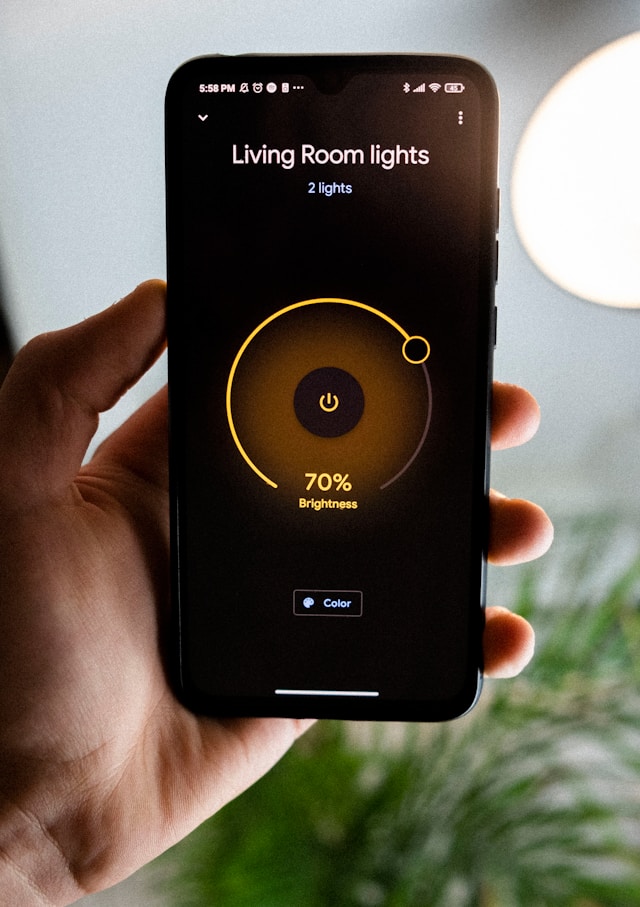
This is the biggest change modern interoperability standards bring to smart homes. Devices are no longer isolated gadgets performing individual tasks. They become part of a coordinated system designed around convenience, automation, and responsiveness. The result is a smart home experience that feels more natural and far less complicated to maintain.
Setting Up a Unified Smart Home
1. Build a Stable Network
Ensure your home has reliable Wi‑Fi coverage and a stable router setup.
2. Use a Central Smart Platform
Platforms such as Apple Home or Google Home now support Matter-compatible onboarding.
3. Add Compatible Devices
Most newer smart devices include:
- QR pairing codes
- Automatic discovery
- Universal setup keys
4. Configure Automations
Once connected, devices can participate in broader automation routines such as:
- Motion-triggered lighting
- Automated security scenes
- Climate adjustments based on occupancy
Smart Home Security Best Practices
As smart homes grow, security remains important. Recommended practices include:
- Using a dedicated IoT or guest network
- Enabling strong passwords and multi-factor authentication
- Keeping device firmware updated
- Removing unsupported devices from the network
- Choosing trusted manufacturers with active support policies
These steps help reduce potential vulnerabilities across connected environments.
The Future of Connected Living
The smart home industry is moving toward a future where devices operate less like isolated gadgets and more like coordinated infrastructure. As interoperability improves, consumers will gain:
- Easier device expansion
- More reliable automation
- Greater platform flexibility
- Faster local responsiveness
- Smarter energy and security management
The long-term goal is seamless automation that works quietly in the background without constant manual control. That vision is finally becoming realistic.
What Comes Next
Smart home consolidation marks a major shift in connected technology. For years, fragmented ecosystems limited what smart homes could actually achieve. Today, standards like Matter and Thread are helping unify devices across brands, making connected living simpler and more practical. Consumers can now build flexible smart environments without being locked into a single ecosystem. The era of disconnected smart homes is slowly coming to an end.